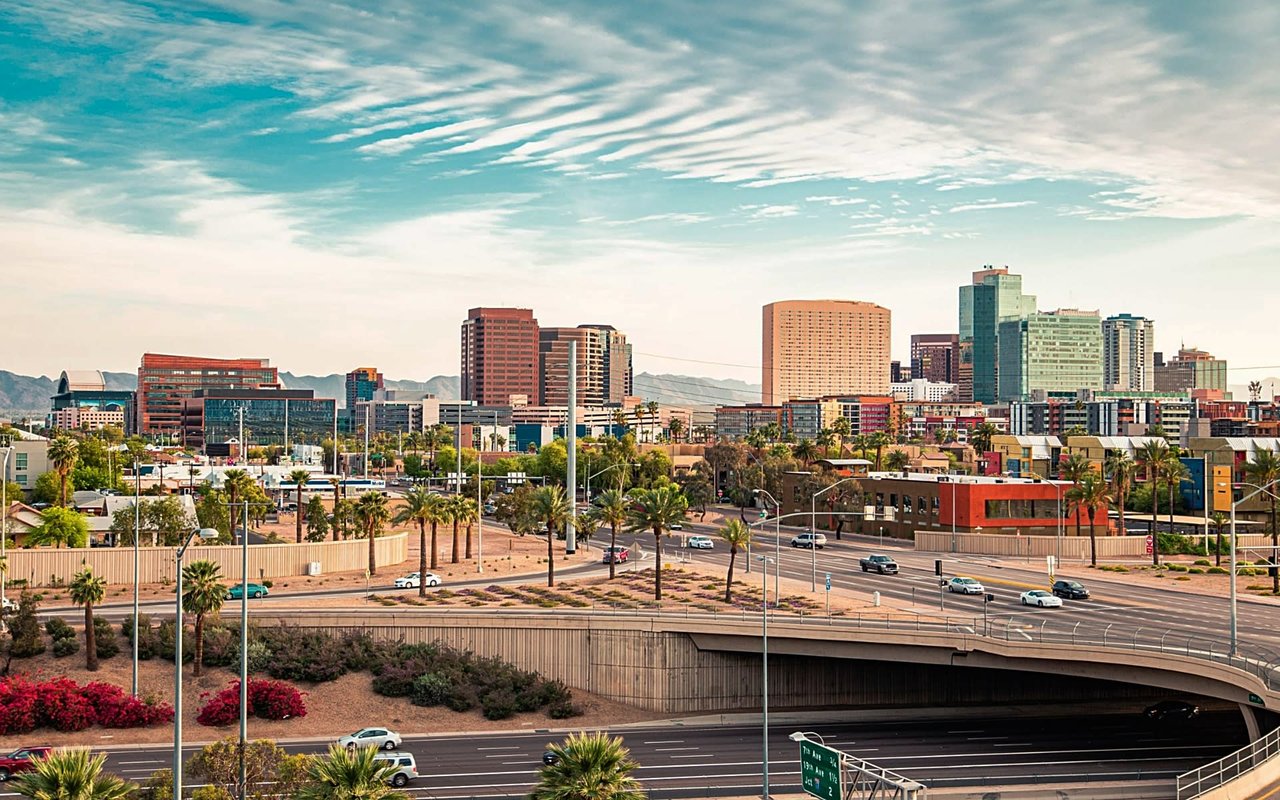
Walk west on Main Street past MacDonald and you'll pass a building that used to be A.J.'s Grocery, now gutted to the studs, chain link along the sidewalk, a City of Mesa notice taped to the glass. It sits maybe fifty feet from a taproom with the patio doors open and a line for tacos at the corner. That gap between the empty shell and the working blocks around it tells you more about downtown Mesa right now than any single opening or closing could.
The building is becoming Main Street Market, a food hall meant to seed the next generation of Mesa restaurants. It is not open. It will not be open this fall, or this winter. The people running it are targeting early 2027. If you've been waiting for that project to be the reason to finally spend a Saturday on Main Street, you've been waiting for the wrong signal. The street already works. The food hall is a bet on what comes after it.
The Building That Isn't Ready Yet
The city bought the old grocery site four years ago using leftover federal pandemic relief dollars, paying $1.6 million for a building that had cycled through several tenants over the years. Mesa then signed a 10-year lease with Local First Arizona to run an incubator program out of the space, a $6 million buildout that will carve the interior into seven separate restaurant bays. Local First's founder, Kimber Lanning, has described the program's real value as teaching food costing and menu discipline, the kind of margin math that determines whether a promising restaurant survives its first two years or doesn't.
The plan calls for each concept to stay in the food hall for two to three years before graduating into its own standalone Mesa storefront, with the nonprofit working alongside local commercial brokers to help place them. That detail matters if you live downtown and wonder where the next wave of Main Street restaurants will actually come from. It isn't a developer leasing up empty retail. It's this building, incubating seven concepts at a time, feeding restaurants into the corridor one lease at a time starting in 2027 at the earliest.
None of that helps you tonight. The food hall is construction dust and a target date. What's open right now is everything around it.
What's Already Working on Main Street
Main Street doesn't need the incubator to function as a food and drink district. It already has one, spread across a handful of storefronts within a few blocks of each other.
| Spot |
What it is |
Where on Main |
| 12 West Brewing |
Craft taproom, beer-braised pork tacos |
12 W Main St, walkable from the Mesa Dr light rail stop |
| Worth Takeaway |
Sandwiches built from locally sourced ingredients |
Main Street corridor |
| Tacos Chiwas |
Family-owned Mexican kitchen |
Main Street corridor |
| Mangos Mexican Café |
Longtime Main Street staple, carne asada tacos |
44 W Main St, near MacDonald |
| Margaritas Fresh Cocina |
Enchiladas suizas, a happy-hour regular |
10 W Main St, corner of Main and MacDonald |
| Goat and Ram, paired with Phantom Fox Brewery |
Combo taproom and kitchen, popular for group events |
Downtown core |
That list isn't exhaustive. Que Chevere serves Latin American plates a few doors down, and Burritoholics has built a following on build-your-own burritos aimed at the after-work and after-light-rail crowd. What connects them isn't a shared developer or a single grand opening date. It's that they've each been operating long enough to become the kind of place regulars mention by name, not by category. That's the corridor the food hall is trying to add to, not replace.
The Mesa Dr light rail stop sits close enough to several of these that you can leave the car at home for a weeknight dinner, which matters more in a Valley where parking is usually the deciding factor in where people actually go.
The Weekend Anchors: A Farmers' Market and a Festival That Draws Thousands
Two recurring events do more to define a fall weekend downtown than any single restaurant opening.
The Downtown Mesa Farmers' Market runs every Saturday, a steady rhythm of local vendors that doesn't depend on a festival calendar or a construction timeline. It's the kind of fixture that residents build a routine around precisely because it's predictable.
The bigger draw this season is the Día de los Muertos Festival at Mesa Arts Center, set for Saturday, October 24, from noon to 10 p.m., and Sunday, October 25, from 11 a.m. to 5 p.m. The lineup includes performances from Vinyl Vagos, Mariachi Pasión, Grupo Coatlicue, The Circus Farm, and Ballet Folklórico La Llorona, building to a procession and ceremony Sunday afternoon at 4:30. Both days open with a Relaxed Hour from 11 a.m. to noon, a lower-sensory version of the festival built for attendees who need a calmer entry point before the full crowd arrives. This year's community altar carries a new dedication, honoring Virginia Aguero, who created the festival's original community altar; the arts center has established a fund in her name to keep future altars fairly compensated for the artists who build them.
Mesa Arts Center itself is worth remembering as more than a single-event venue. The 210,000-square-foot campus at 1 E Main Street opened in 2005 and occupies a full city block, with four performance spaces including the 1,600-seat Ikeda Theater and the smaller Farnsworth Studio Theater. Around the Día de los Muertos weekend, the center is also running its Season Kickoff, when the Mesa Contemporary Arts Museum unveils new fall exhibitions, giving Main Street two draws on the same stretch of sidewalk in the same season.
Why the Timing Is the Real Story
It would be easy to write off this fall as a placeholder, a quiet stretch before the food hall opens and downtown Mesa gets its next real headline. That reading gets the sequence backward. The food hall is a multi-year bet on future restaurants that don't exist yet as public-facing storefronts. The festival calendar and the restaurant row are the evidence of what the street can already support without it.
That distinction matters for anyone trying to read whether a neighborhood's momentum is real or promotional. A construction project with a 2027 target date is a plan. A Saturday farmers' market that runs every week regardless of what else is happening, and a festival that pulls in named performers and builds a multi-year community tradition around an altar dedication, are commitments the street is already keeping. If you're gauging whether downtown Mesa's energy is durable or just well-marketed, the answer isn't in the gutted building on Main. It's in the fact that 12 West Brewing doesn't need a grand opening this month to have a line, and Mesa Arts Center doesn't need the food hall next door to fill four theaters and two festival days in October.
The incubator will matter eventually. Watch for it in 2027, when the first seven concepts move in and the clock starts on which ones graduate into their own Main Street leases. Until then, the street isn't waiting on anyone's construction schedule, and neither should you.
If you're curious what else defines daily life across Mesa's neighborhoods, or want a closer look at how downtown fits into the broader East Valley picture, Celina Acosta keeps a running read on what's actually happening on the ground here, not just what's been announced.