Moving to Tempe with kids and not sure where to start? You want the right mix of schools, parks, commute time, and a home that fits how your family lives. The good news is Tempe gives you real choices, from established neighborhoods with larger yards to lakefront trails and quick access to transit. In this guide, you’ll learn how school options work, what different parts of Tempe feel like, and how to evaluate tradeoffs with confidence. Let’s dive in.
How school choice works in Tempe
Tempe’s K–12 landscape includes multiple public districts, charter options, and private schools. Elementary and middle grades are most often served by Tempe Elementary School District or Kyrene School District, depending on your address. High schools in Tempe are typically part of Tempe Union High School District, though some boundary lines cross city limits.
Districts at a glance
- Tempe Elementary School District covers much of central and north Tempe for K–8.
- Kyrene School District serves many neighborhoods in south Tempe for K–8.
- Tempe Union High School District operates several high schools that serve Tempe addresses.
- Boundaries can cross city lines, so a Tempe address may feed into a neighboring district. Always verify by exact address.
Verify your school assignment
School boundaries and programs change over time. To confirm your path:
- Use the attendance boundary tools or maps on the applicable district websites and contact district offices with your exact address.
- Review open enrollment policies. Many districts allow transfers if space is available.
- Check Arizona Department of Education school report cards for test results, growth measures, and graduation rates.
- For program fit, look at district pages for dual language, gifted and talented, Advanced Placement or IB, CTE, and special education services.
Charter and magnet options
Charter schools across the metro operate on a lottery system and do not use attendance boundaries. If you are exploring charters, note application windows and waitlists. Use Arizona charter listings to identify nearby campuses and confirm transportation, schedule, and extracurriculars.
Tempe neighborhoods for families
Every family values different tradeoffs. Use these area profiles to match your must-haves to the right part of town.
Central and downtown Tempe
You’ll find higher walkability, a mix of condos, townhomes, and infill single-family homes, and quick access to restaurants and venues near ASU. Lots are smaller and streets are busier than quiet residential areas. This setting suits active households that value convenience and short commutes.
Lakeside and east/central Tempe
Near Tempe Town Lake, you get daily access to multi-use paths, waterfront parks, and strong bike and pedestrian networks. Housing includes older ranch homes and newer infill. Proximity to parks and the lake often commands a premium, and lots tend to be mid sized.
North and northeast Tempe
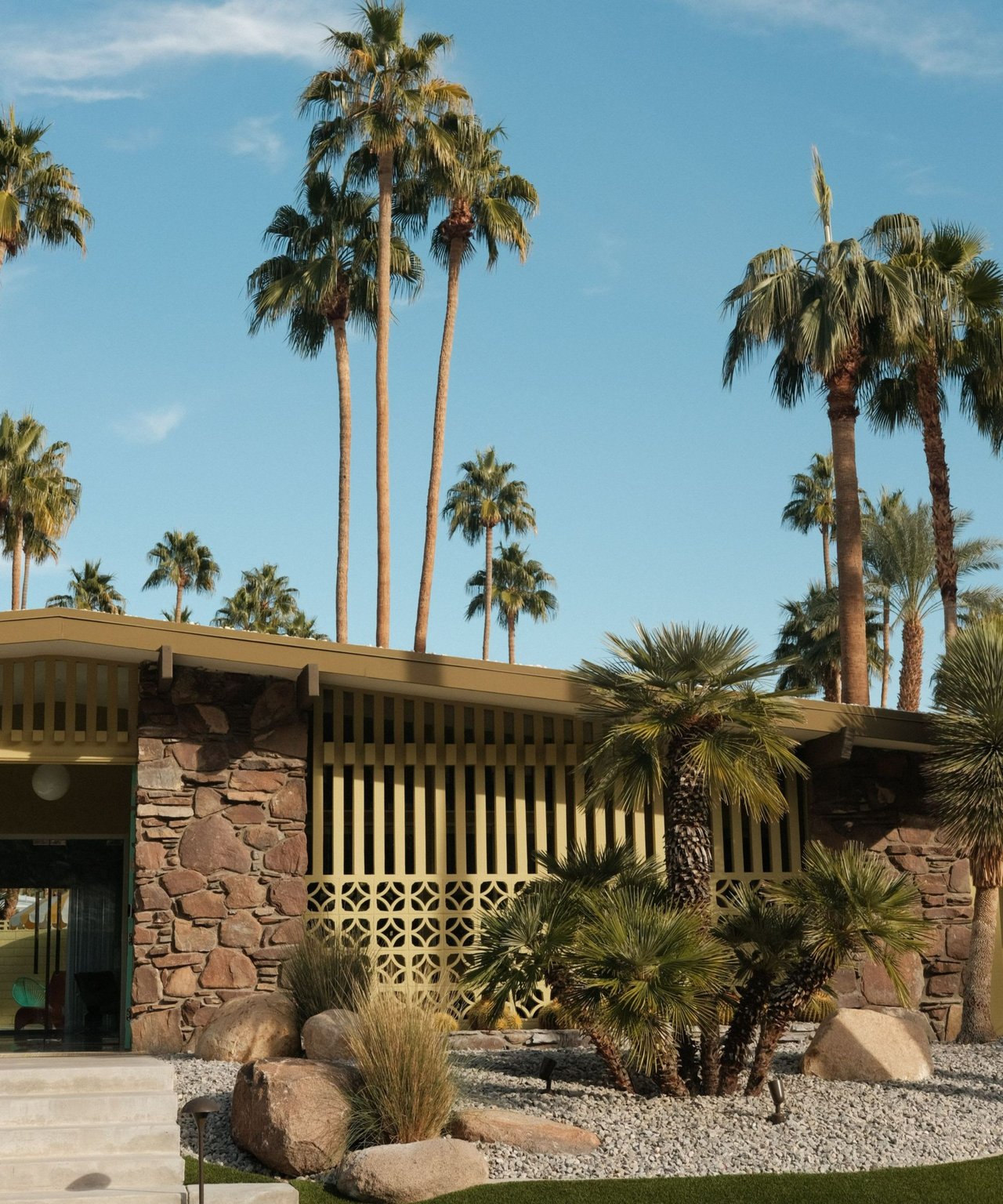
These established neighborhoods feature many mid-century ranch and split-level homes on larger lots with tree-lined streets and local parks. The feel is more traditional suburban, with space for play and gardening. If you want a yard and a conventional single-family setting, start here.
South Tempe and the Kyrene corridor
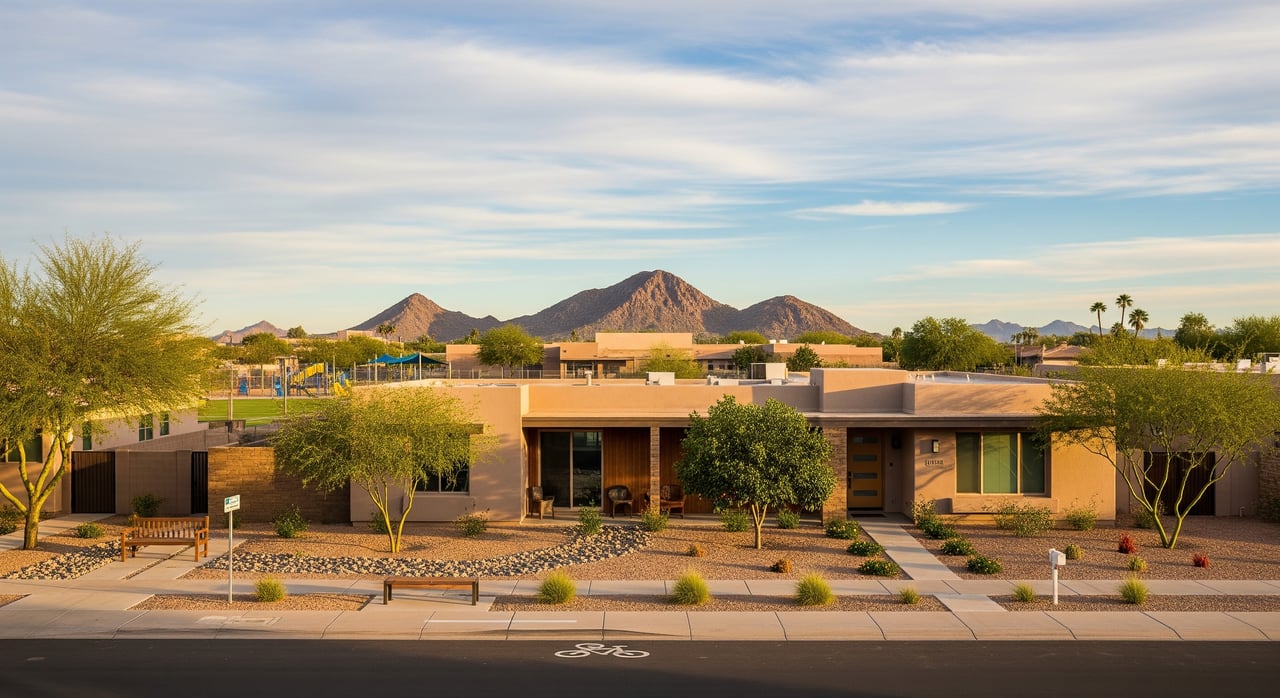
South Tempe offers more recent subdivisions, many with single-family homes, larger lots, and neighborhood parks. These areas are near shopping and major arterials for commuting. Families who want newer construction and nearby school campuses often look here first.
Southern edge neighborhoods
Close to Chandler and Mesa, you’ll see newer subdivisions with single-story options, planned amenities, and larger homes. These areas can offer more space while keeping reasonable access to Tempe jobs and services. Expect tradeoffs in commute time depending on your work location.
Parks, recreation, and after-school
Tempe shines when it comes to getting outside. Tempe Town Lake is a hub for biking, running, and family outings along multi-use paths. You also have easy access to larger regional parks, including Papago Park and South Mountain Park and Preserve, plus a network of canal paths and bike lanes across the city.
For after-school time, look into City of Tempe Parks and Recreation programs, school-based offerings, and community providers. Availability varies by location and season. If you are relocating, start your childcare or preschool search early and ask about waitlists for peak enrollment periods.
Commute and transit tips
Tempe is centrally located with good access to downtown Phoenix, Scottsdale, Chandler, Mesa, and Phoenix Sky Harbor. Valley Metro Light Rail runs east to west through central Tempe, and local and regional buses connect neighborhoods to major employment centers. Bike and pedestrian infrastructure is most robust near the lake and canal corridors.
When comparing homes, test your commute during peak hours using your exact start and end points. Include school or daycare drop-off in your routing. If you plan to use transit, check your proximity to Light Rail stations and bus lines, and consider first and last mile options like biking or school bus service.
What housing looks like in Tempe
Tempe’s neighborhoods offer a wide range of home types and lot sizes:
- Older mid-century areas: Single-family ranch homes, often 2 or 3 bedrooms, on modest to medium lots. Many are good candidates for thoughtful updates or additions.
- Infill and new construction: Townhomes and single-family homes with modern floor plans on smaller lots near central locations.
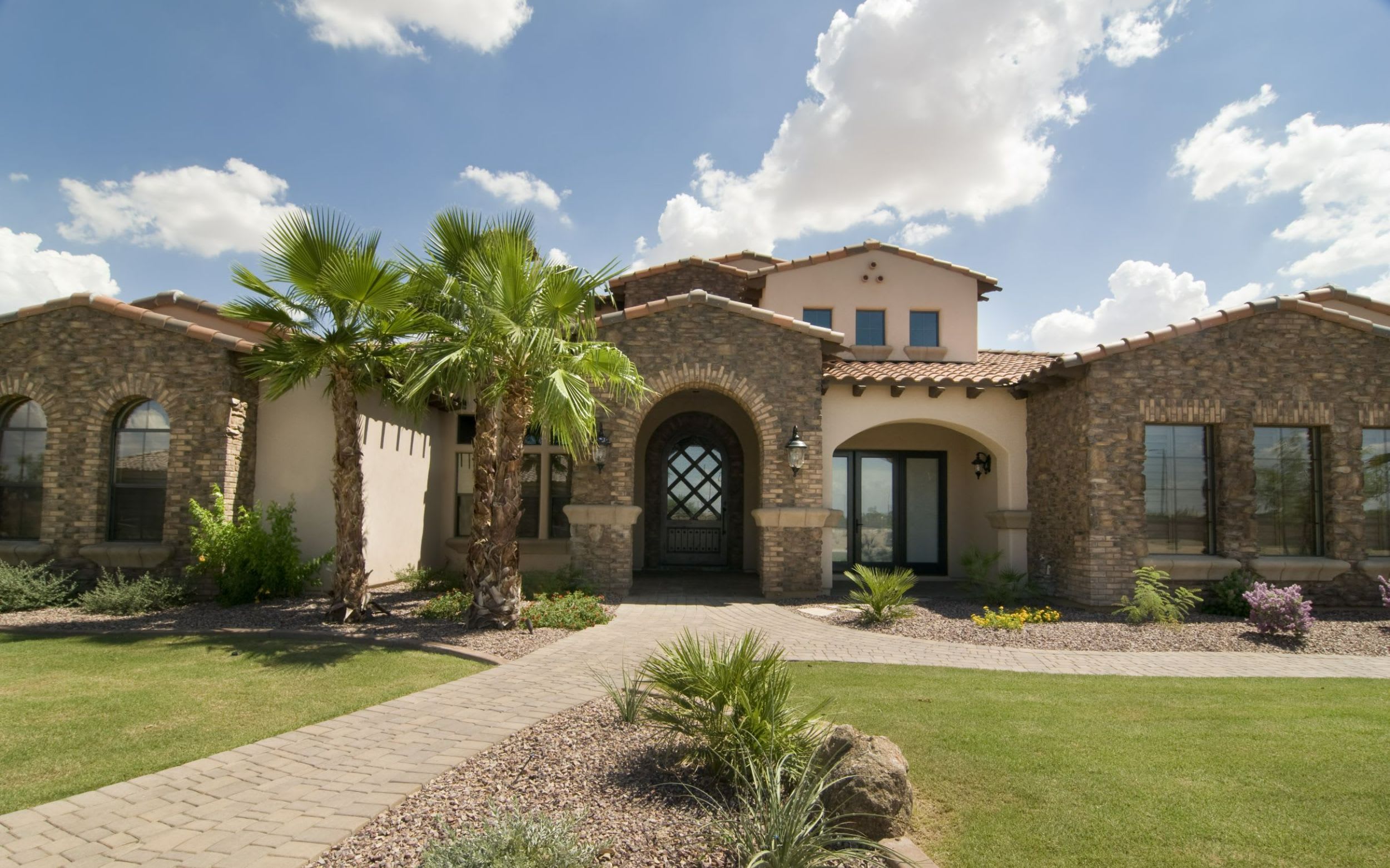
- Suburban subdivisions: Especially in south Tempe, you’ll find more recent 3 to 5 bedroom homes, larger yards, and community amenities.
Prices vary by area and condition. Central and infill locations tend to have a higher price per square foot, while established north and south neighborhoods often provide more yard for the money. For current numbers, request MLS-based comps and trend charts at the time you are ready to shop.
Step-by-step evaluation checklist
Use this quick framework to compare homes and neighborhoods:
Schools and child services
- Verify the school attendance zone for the exact address using district tools.
- Review school report cards, extracurriculars, and program offerings.
- Confirm childcare and preschool availability and ask about waitlists.
Home and lot suitability
- Identify minimum bedrooms, flexible spaces for office or guests, and yard size.
- Ask about potential for additions or an ADU and check local permitting.
- Review age of systems such as roof and HVAC and the renovation level.
Commute and logistics
- Test peak-hour commute times to work and to schools or daycare.
- Note proximity to Light Rail stops, bus lines, and bike routes.
- Observe school drop-off traffic and safe walking or biking routes.
Neighborhood amenities and lifestyle
- Measure distance to parks, playgrounds, libraries, and community centers.
- Check walkability to groceries, medical services, and daily necessities.
- Visit at different times to gauge noise and evening activity.
Financial and long-term outlook
- Review property taxes and any HOA fees.
- Consider resale demand factors such as school access and employment centers.
- Ask about any planned road or infrastructure projects nearby.
How to match your lifestyle to an area
Start by ranking what matters most: yard size, school proximity, commute tolerance, and daily amenities. If you want a larger lot and a traditional neighborhood feel, focus on north or south Tempe. If your priority is walkability and weekend access to the lake and transit, explore central and lakeside pockets. If you want newer construction and space, look at the southern edges near the Tempe border.
A simple approach is to shortlist two contrasting areas and schedule back-to-back tours. Walk a park, drive a school drop-off route, and test the commute at rush hour. You will feel the differences quickly and narrow your target confidently.
A weekend scouting game plan
- Morning: Coffee near Tempe Town Lake, then a family walk or bike ride on the paths to gauge daily convenience.
- Late morning: Drive through a north or south Tempe subdivision, note yard sizes, and visit a neighborhood park.
- Early afternoon: Tour a central or infill home to compare floor plans and lot sizes.
- Late afternoon: Time the drive to your work location and to Phoenix Sky Harbor.
- Evening: Revisit your top neighborhood to see activity and noise after work hours.
Ready to compare homes, schools, and commutes with local insight? Get personalized guidance, neighborhood tours, and MLS-based data tailored to your family’s plans. Connect with Celina Acosta for a friendly consultation in English or Spanish.
FAQs
How do Tempe school boundaries work for my address?
- Use the district boundary tools for Tempe Elementary, Kyrene, and Tempe Union, and confirm by contacting the district with your exact address.
What areas offer larger lots in Tempe?
- North and south Tempe often feature larger-lot single-family homes, while central and lakeside areas tend to have smaller lots with more walkability.
Are there charter school options in or near Tempe?
- Yes. Charters operate by lottery rather than boundaries. Check application windows, transportation, and schedules for each school.
How can I estimate my daily commute from a Tempe home?
- Test drive times at peak hours using your specific start and end points, and include school or daycare stops in your route.
Where can my family access parks and trails in Tempe?
- Tempe Town Lake paths, neighborhood parks, and nearby regional parks like Papago Park and South Mountain offer a range of outdoor options.
What types of homes are common for move-up buyers in Tempe?
- You will see mid-century ranches, newer suburban subdivisions with 3 to 5 bedrooms, and central infill homes with modern floor plans.
How do I check after-school and childcare availability?
- Start with City of Tempe Parks and Recreation programs, school-based options, and licensed providers, and ask about waitlists early.