If you have ever stepped into a Chandler backyard at 5 p.m. in July, you know the sun here does not play around. In our hot, sunny climate, the direction a home faces can shape daily comfort, energy bills, and how much you enjoy your patio. You want a home that feels cool, bright, and usable when it matters most. In this guide, you will learn how north/south exposure plays out in Chandler, what it means for cooling, solar potential, and resale, and simple fixes if a home’s orientation is not ideal. Let’s dive in.
What exposure really means in Chandler
In the Phoenix metro, summers are long and hot, and cooling is the main energy need. That is why managing sun is a priority. When you see “north/south exposure” in a listing, it usually refers to where the front of the home or the backyard faces. What you feel day to day comes down to where your biggest windows and outdoor spaces face.
Here is the quick sun-path reality: south-facing areas get the most total sun across the year, east-facing rooms get strong morning light, and west-facing areas receive intense late-afternoon sun. In our climate, west sun is the toughest because it hits when the day is hottest and you want to use outdoor spaces.
How orientation affects daily comfort
West sun and cooling loads
Late-afternoon sun on west-facing windows drives up indoor temperatures and air conditioning use. Large west-facing glass can create glare and hot spots in living rooms and bedrooms. If you love using your patio after work, a west-facing backyard often needs extra shade to feel comfortable in summer evenings.
South, east, and north windows
South-facing windows can work well when shaded with overhangs or pergolas that block high summer sun but allow lower winter sun if you want it. East-facing rooms warm in the morning and cool by afternoon, which many people like for bedrooms. North-facing windows provide even, diffuse light with minimal direct heat gain, which is great for home offices and living spaces.
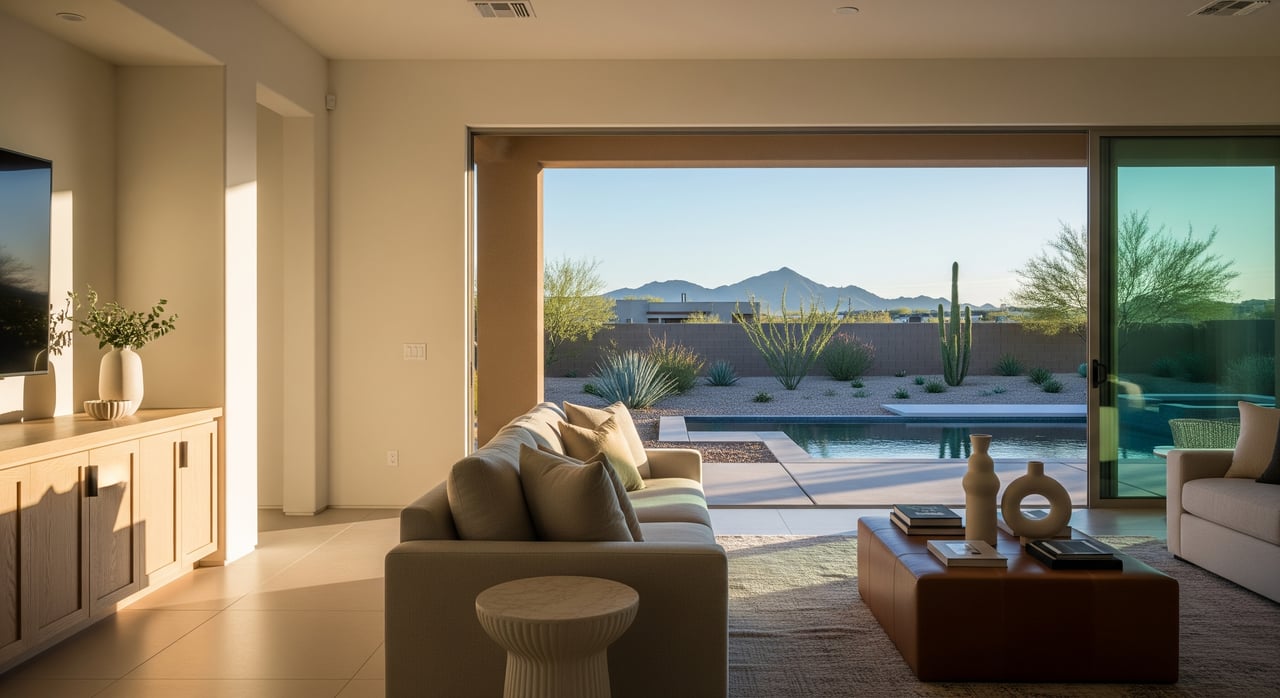
Outdoor living and backyard direction
- North-facing backyards are often easier to keep cool and shaded in summer.
- West-facing backyards can be beautiful at sunset but need shade structures, screens, or trees to be enjoyable in peak heat months.
- South-facing patios benefit from deeper overhangs to block high summer sun.
Energy use and savings opportunities
Cooling energy and peak demand
Because Chandler is cooling dominated, reducing late-afternoon solar gain can help lower both indoor temperatures and peak air conditioning demand. Orientation is not the only factor, but it is one of the most cost-effective places to start, especially when combined with smart shading.
Windows and shading that matter
Focus on exterior shading for the biggest impact. Awnings, fixed overhangs, exterior roller shades, and shade screens block heat before it enters. On the glass, prioritize low solar heat gain coefficient (low SHGC) on west and east windows. Interior blinds help with glare but do less to stop heat.
Roof color, attic, and ducts
Cool roof materials or coatings reflect sunlight and can reduce heat gain. Make sure attic insulation is adequate and ducts are sealed. Poorly insulated attics or leaky ducts can undermine the benefits of good orientation and shading.
Solar potential by roof orientation
South-facing roof planes with minimal shade typically deliver the highest annual solar production. West-facing panels can align better with late-afternoon usage, though they usually produce slightly less total energy than south. Actual performance depends on roof pitch, shade, and your utility rate structure.
If you are serious about solar, ask an installer to model both south and west roof planes using a production tool based on local solar data. The right setup depends on your roof geometry, trees, and how your household uses electricity.
Buyer checklist for Chandler orientation
Use this simple walk-through when you tour a home:
- Visit in late afternoon to feel heat and glare, inside and on the patio.
- Identify where the backyard faces and how the main living spaces orient.
- Note any large west-facing windows. Look for awnings, exterior shades, or trees.
- Ask about cooling performance in west-facing rooms and review recent energy bills.
- Look at roof planes for solar potential and check for shade from trees or structures.
- Peek in the attic for insulation levels and consider duct condition and placement.
Seller strategies to boost comfort and value
Showcase shading and upgrades
If you have awnings, shade screens, pergolas, or mature trees that cool the patio, highlight them in your listing. If you have upgraded to low-e windows or improved attic insulation, call that out too. Buyers value features that lower cooling needs and make outdoor spaces usable.
Targeted, high-impact improvements
Consider these cost-conscious upgrades before listing:
- Exterior shades or films on west-facing glass
- A pergola or deeper overhang for a south-facing patio
- Strategic landscaping on the west side for afternoon shade
- Cool roof coating during roof maintenance
Showing tips that make a difference
If your patio gets afternoon sun, schedule showings when shade structures can be demonstrated. Open exterior shades or screens to show how they cut heat and glare. Share utility bills and HVAC service records to build confidence.
New builds, HOAs, and permits
Tract lots versus custom builds
In many Chandler communities, lot orientation is set by the subdivision plan. Focus on matching the orientation to how you live. Place living spaces where they will be comfortable, and plan shading for the strongest sun exposures. For custom homes, protect west-facing facades, orient key rooms to north or east where possible, and design roof geometry to support solar.
HOAs and local requirements
Many neighborhoods have HOA rules about visible solar panels, pergolas, and exterior modifications. Review covenants early in your planning. The City of Chandler has permitting requirements for solar, shade structures, and major changes, so account for review timelines when planning your project.
Does north/south exposure affect resale?
Orientation can influence buyer interest because it affects cooling costs and outdoor living, which are top priorities in the Phoenix metro. Many buyers favor homes that control afternoon heat and offer usable shade. The compass direction matters, but what matters most is how the home handles sun through shading, window performance, insulation, and smart landscape design. If you are selling, emphasize these features. If you are buying, weigh the cost to add them.
If you would like help evaluating a specific home’s orientation and the best upgrades for comfort and resale, let’s talk. For local guidance across Chandler and the Southeast Valley, connect with Celina Acosta. Hablamos español.
FAQs
What does north/south exposure mean for Chandler homes?
- It usually refers to how the home or backyard faces, which affects sun on windows and patios. In Chandler, the biggest comfort factor is controlling late-afternoon west sun.
How does a west-facing backyard affect comfort in summer?
- West-facing patios get intense late-afternoon sun during the hottest hours, so they often need shade structures, screens, or trees to stay comfortable.
Do south-facing roofs produce more solar power in Chandler?
- Generally yes, south-facing roof planes with minimal shade deliver the highest annual output, while west-facing arrays shift more production to late afternoon.
What are the best quick fixes for hot west-facing rooms?
- Add exterior shades or awnings, upgrade to low-SHGC windows or films, and use trees or trellises outside. Interior blinds help with glare but less with heat.
Will orientation alone lower my energy bills?
- Orientation helps, but real savings come from a combo of shading, efficient windows, attic insulation, sealed ducts, and right-sized HVAC, plus smart thermostat use.