Dreaming about more space in Queen Creek? If you are picturing a property with room for horses, chickens, a workshop, or a small hobby farm setup, you are not alone. Queen Creek has deep farming and ranching roots, but not every large lot works the same way, so understanding the details can help you buy with confidence. Let’s dive in.
Why Queen Creek appeals to acreage buyers
Queen Creek is a natural fit for buyers who want extra elbow room and a more rural feel. The Town says its roots go back to early-1900s farming and ranching, and its zoning approach has been updated over time to help preserve that small-town rural character as the community grows.
You can still see that identity in everyday life around town. Horseshoe Park & Equestrian Centre, a 38-acre local venue, hosts English and Western equestrian events, rodeos, and related activities, which reflects how visible the equestrian lifestyle remains in Queen Creek.
Queen Creek acreage is not one-size-fits-all
One of the biggest surprises for buyers is that "acreage" in Queen Creek can mean several different things. Some parcels are truly rural, while others are larger residential lots with more suburban infrastructure and tighter design standards.
Queen Creek’s zoning table includes a wide range of lot patterns. A-1 allows 10 acres per dwelling unit, while R1-190 allows 5 acres, R1-145 allows 3.33 acres, R1-108 allows 2.5 acres, R1-54 allows 1.25 acres, R1-43 allows 1 acre, and R1-35 allows 35,000 square feet.
That matters because the zoning district shapes what the property feels like and how you can use it. The Town describes R1-43 as a transition district between rural and urban uses, while R1-35 is intended for medium low-density single-family development where adequate public facilities and services already exist.
A local zoning detail to watch
Some properties in R1-54 have a unique background. The Town ties that district to land that was formerly in unincorporated Pinal County and later annexed into Queen Creek, so some hobby-farm style homes may have a different land-use history than properties on the Maricopa County side of town.
This does not automatically make one property better than another. It simply means you should look closely at the parcel’s zoning, annexation background, and current rules instead of assuming every large lot has the same flexibility.
What features are common on hobby-farm properties
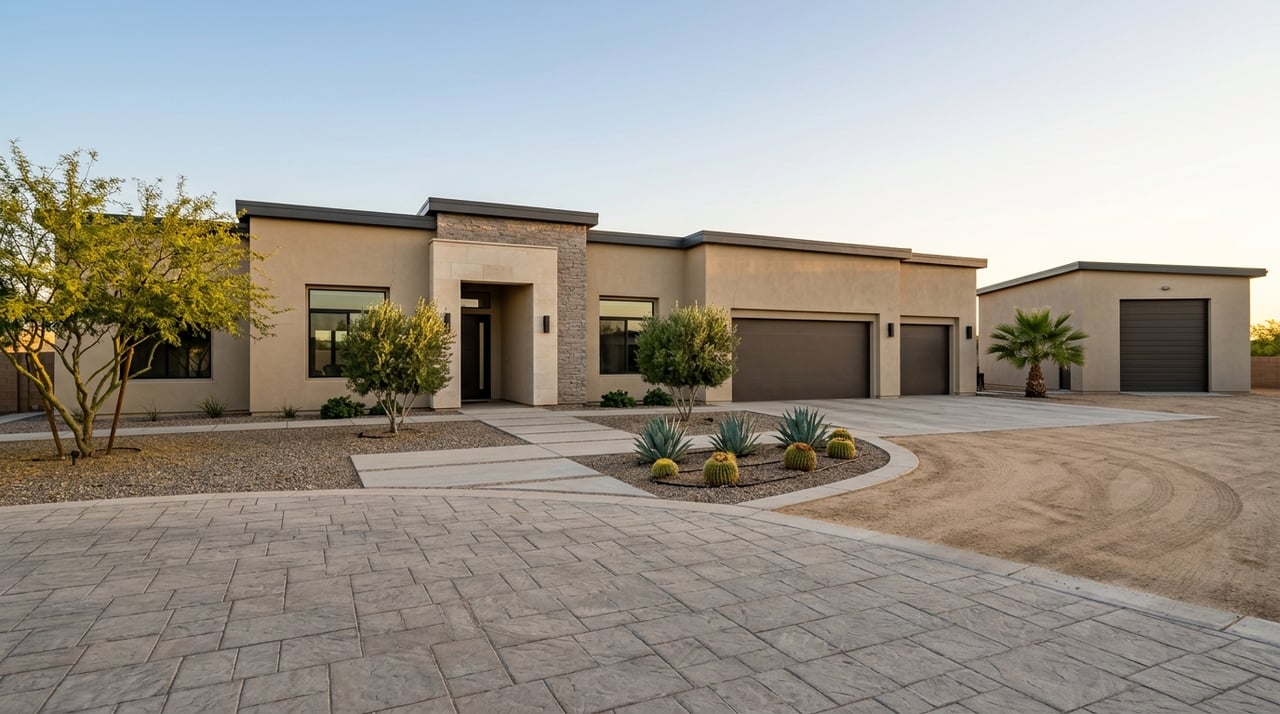
Acreage and hobby-farm properties in Queen Creek often attract buyers who want more than just a bigger yard. You may be looking for space for a barn, detached garage, workshop, sheds, ramadas, pergolas, a pool house, or even an accessory dwelling unit.
Queen Creek allows a wide range of accessory structures, but the details matter. The Town says detached structures that are 200 square feet or larger generally require a building permit, and HOA or CC&R rules can be stricter than the zoning code.
Rural districts may offer more design flexibility
The level of flexibility can depend on the district. In R1-43, detached accessory buildings generally do not have to match the main home’s design, although setback rules still apply.
In more suburban districts, detached accessory buildings must generally match the primary residence’s architectural design, materials, roof type, and color. For buyers who want a more traditional barn or utility-style outbuilding, that distinction can have a real impact on how practical a property feels.
Barn and stable basics
If you plan to keep horses or livestock, stable placement is another key item. The code says stables must be behind the front face plane of the main building, at least 5 feet from rear and side property lines, and generally within the height limits of the zoning district.
Barns and animal shade structures are also specifically addressed in the code for some large-lot residential districts, including R1-35. As with other detached structures, permits are generally required for structures that are 200 square feet or larger.
Animal rules can shape your daily use
For many buyers, the biggest question is simple: can you actually keep the animals you want? In Queen Creek, the answer depends on lot size, the current code language, and whether any HOA rules add more restrictions.
The January 2026 zoning document shows an animal-unit schedule for residential lots. It lists 2 animal units for lots between 35,000 and 39,999 square feet, 3 units for lots between 40,000 and 43,559 square feet, and 4 units for lots of 43,560 square feet and larger, with one additional animal unit allowed per 30,000 square feet above one acre.
The code also explains what an animal unit can mean. One animal unit may equal one large livestock animal such as a horse, five goats or sheep, or ten small livestock animals such as chickens. Roosters are allowed only on lots that are one acre or larger.
Chicken rules for smaller lots
Queen Creek also has specific rules for chicken keeping on smaller residential lots. Under the current posted code, lots under 10,000 square feet may keep up to six chickens, and lots from 10,000 square feet to under 35,000 square feet may keep up to ten chickens.
For lots under one acre, chicken coops also have location, height, and screening requirements. If you are buying a property with plans for chickens right away, this is a good example of why it helps to review the exact current rules before you close.
Why current verification matters
There is an important local timing issue here. On April 16, 2026, the Town announced Council approval of Ordinance P25-0153, including removal of animal-unit count allowances for lots one acre and larger, permission for swine on one-acre-plus lots, and new pasture and shade requirements.
At the same time, the posted codified zoning PDF still shows the older animal-unit table. For buyers, that means one of the smartest due-diligence steps is confirming the final effective text with the Town before you make decisions based on animal allowances.
Nuisance and sanitation rules still apply
Even when animal keeping is allowed, there are operational standards to follow. Queen Creek says animal keeping cannot create odor, flies, rodents, standing water, manure accumulation, or similar impacts that interfere with neighboring property use.
The Town also regulates waste storage and confinement areas. In practical terms, hobby-farm living offers freedom, but it also comes with responsibility for upkeep and day-to-day property management.
Irrigation and water questions to ask early
Water is a major part of the conversation when you are looking at acreage. Some buyers assume a larger lot automatically includes flood irrigation, but Queen Creek says irrigation service is not universal and only homes in designated irrigation areas are eligible.
The Town’s irrigation program serves about 500 residential customer properties year-round. Deliveries are typically twice monthly in summer and once monthly in winter.
Flood irrigation is not guaranteed
This is one of the most important details to understand before you buy. The Town says flood irrigation is not guaranteed, and most users receive water ordered in advance from the Central Arizona Project and delivered by the Queen Creek Irrigation District.
If access to the property is unavailable on irrigation day, delivery can be missed while charges may still apply. The Town also instructs owners to contain water on their property and recommends having a sprinkler system as a backup when flood irrigation is unavailable.
Water supply is still a common buyer concern
Water security is part of many buyer conversations in Arizona, especially for larger properties. Queen Creek says all current residential water customers have a certificate of 100-year assured water supply through groundwater, that the majority of the town has assured supply for the next 100 years, and that only a small number of undeveloped properties still need a renewable source before development can proceed.
That is useful context, but it is still wise to ask how the specific property is served and whether irrigation eligibility applies. For acreage buyers, those answers affect both daily living and long-term planning.
HOA rules can matter as much as zoning
A property may look ideal on paper and still come with added private restrictions. Queen Creek specifically notes that HOA or CC&R rules may impose requirements beyond the zoning code, especially for accessory structures.
That means your due diligence should not stop at town zoning. If the property is in an HOA, you will want to review rules for barns, sheds, workshops, animal use, fencing, and any exterior improvements you hope to make.
Large lots can have extra service details too
There are also a few practical ownership details that larger-lot buyers may not expect. Queen Creek allows residents on lots of 2 acres or more, or those who keep livestock on the property, to apply for an exemption from the Town’s solid-waste and bulk-waste service if they have alternative disposal service.
It is a small detail, but it is a good example of how acreage living often comes with a different operating rhythm than a standard subdivision home. The property may offer more flexibility, but you may also be managing more systems yourself.
Acreage living versus suburban living
The tradeoff in Queen Creek is pretty straightforward. Larger lots can give you more privacy, room for animals, and space for outbuildings, but they can also bring more maintenance, more permit review, more irrigation responsibility, and more checkpoints from zoning or HOA rules.
By comparison, a standard suburban property may be simpler to maintain and easier to navigate from a rules standpoint. The best fit depends on whether you want the extra space enough to take on the added planning and upkeep that often comes with it.
Questions to ask before buying Queen Creek acreage
If you are seriously considering acreage or a hobby-farm property, a few questions can help you sort through listings faster and avoid surprises.
- What zoning district is the parcel in?
- Is the home in a designated Town irrigation area?
- Does an HOA or CC&R set extra limits?
- What animal use is allowed under the most current Town rules?
- What permits may be needed for barns, workshops, sheds, or other structures?
- Does the property function more like a rural parcel or a large-lot suburban home?
Those answers usually tell you whether a property will truly support the lifestyle you want. They can also help you compare two homes that may look similar online but function very differently in real life.
If you are weighing Queen Creek acreage against a more traditional neighborhood home, the key is matching the property to your goals. A little extra homework upfront can save you time, money, and frustration later.
When you want clear guidance on buying in the Southeast Valley, Celina Acosta can help you evaluate the details that matter most and move forward with confidence.
FAQs
What zoning districts commonly affect Queen Creek acreage properties?
- Queen Creek acreage properties may fall in districts such as A-1, R1-190, R1-145, R1-108, R1-54, R1-43, or R1-35, and each district can shape lot size, flexibility, and how rural or suburban the property feels.
What animal rules apply to Queen Creek hobby-farm homes?
- Animal allowances in Queen Creek depend on lot size and current code language, and because the Town approved ordinance updates in 2026 while older animal-unit tables still appear in the posted PDF, buyers should confirm the final effective rules before closing.
What should buyers know about Queen Creek irrigation service?
- Irrigation service is not available everywhere in Queen Creek, only properties in designated irrigation areas are eligible, and flood irrigation is not guaranteed.
What accessory structures are allowed on Queen Creek acreage?
- Queen Creek allows structures such as detached garages, workshops, barns, sheds, ramadas, pergolas, pool houses, and accessory dwelling units, but permits and setback rules may apply, and HOA rules may be stricter.
What is the difference between R1-43 and R1-35 in Queen Creek?
- The Town describes R1-43 as a transition district between rural and urban uses, while R1-35 is intended for medium low-density single-family development where adequate public facilities and services exist.
What due diligence matters most for Queen Creek acreage buyers?
- The most important checks are zoning, current animal-use rules, irrigation eligibility, accessory-structure requirements, and any HOA or CC&R restrictions tied to the property.