Thinking about relocating to Chandler for a new job? You are not alone, and the right move can make a big difference in your daily routine. Chandler offers a large job base, several major employment districts, and a range of housing options, but where you live can shape everything from your commute to your weekend plans. This guide will help you connect Chandler’s work hubs, housing costs, and everyday lifestyle so you can make a smarter move with less guesswork. Let’s dive in.
Why Chandler Works for Professionals
Chandler has a deep employment base for a city of its size. According to the City of Chandler’s employment and business district overview, the city has 134,860 total jobs, and 102,140 of those jobs are concentrated in five designated employment and business districts.
That matters if you are relocating for work. Instead of one single downtown core, Chandler has multiple employment clusters, which gives you more flexibility when choosing where to rent or buy.
Chandler’s Main Job Centers
Price Corridor
The Price Corridor is Chandler’s largest employment district with 42,060 jobs. The city describes it as Chandler’s leading high-tech center at the Loop 101 and Loop 202 interchange, with major employers including Intel, Wells Fargo, Bank of America, Northrop Grumman, and Microchip.
If you work in tech, finance, or semiconductor-related roles, this is one of the most important areas to map first. Living nearby can help reduce drive time and make weekday routines easier.
West Chandler
West Chandler holds 29,900 jobs, making it another major piece of the local economy, according to the city’s district overview. If your job is west of the Loop 101 corridor or near I-10 access, this area deserves close attention during your housing search.
For many relocating buyers and renters, West Chandler can be a practical option because it connects well to regional freeway routes. That can help if your household has more than one commuter.
Airpark Area
The Airpark Area has 14,870 jobs and direct access to Loop 202. The city calls it Chandler’s fastest-growing employment corridor, anchored by Chandler Municipal Airport and supported by employers such as EMD Electronics, Edwards, VIAVI, and Insight Enterprises.
If you are moving for manufacturing, industrial, or tech-adjacent work, this area may be especially relevant. It can also be appealing if fast freeway access matters to your schedule.
Uptown and Downtown Chandler
Uptown Chandler has 12,030 jobs, while Downtown Chandler has 3,280 jobs, based on the city’s employment district data. These areas show that Chandler’s job footprint is spread across more than just the biggest freeway nodes.
If you want a more central location with easier access to dining, events, and city amenities, these parts of Chandler may be worth a look. Your commute may be a little different than someone working in Price Corridor, so timing your route is important.
Healthcare and Major Employers
Healthcare is also a meaningful part of Chandler’s employment base. Chandler Regional Medical Center is a 429-bed hospital with more than 2,600 employees and over 1,100 doctors on staff.
For semiconductor and manufacturing professionals, Chandler is also home to major operations for Microchip, Intel, and NXP. If your relocation is tied to one of these employers, your ideal neighborhood search should start with commute patterns, not just price.
Freeways and Commute Corridors
Chandler is served by several major routes. The city’s transportation planning report identifies I-10 on the west, US 60 north of the city, Loop 101 running north-south, Loop 202 running east-west, and State Route 87/Arizona Avenue as a major regional north-south arterial.
These roadways shape how most people move around the city and the larger Southeast Valley. If your job is in Chandler but your partner works in another East Valley or Phoenix-area location, these connections become even more important.
Commute areas to focus on
A practical home search often centers on these general zones:
- Loop 101 and Loop 202 area for access to Price Corridor employers
- South Chandler and Airpark-adjacent areas for manufacturing and industrial job centers
- Central Chandler and Downtown for a more central location tied to amenities and mixed job access
This framework is a practical inference based on the city’s district maps and freeway layout, not an official city designation. Still, it is a useful starting point when you are narrowing neighborhoods.
Airport access for frequent travelers
If your work involves regular flights, proximity to the airport may factor into your decision. The city’s Price Corridor brochure places Phoenix Sky Harbor about 18 miles or 19 minutes from the corridor center.
That can be a major plus for professionals who travel often. Microchip also notes its Chandler headquarters is about 20 miles from Sky Harbor, which reinforces how connected this part of Chandler is for regional and national travel.
Chandler Housing Costs at a Glance
If you are moving to Chandler for work, housing costs will likely play a major role in your decision. The local market offers a mix of rental and purchase options, but prices can vary a lot depending on location, home type, and commute convenience.
Buying in Chandler
As of February 28, 2026, Zillow reported a typical Chandler home value of $521,806, down 2.4% year over year, with homes going pending in about 33 days. Zillow also reported a median sale price of $491,833 and a median list price of $521,633.
At the same time, Redfin reported a median sale price of $558,000 for February 2026. Because those sources use different methods and data sets, it is more accurate to think of Chandler’s purchase market as falling in a broad range, rather than relying on one exact number.
Renting in Chandler
For renters, Zillow reported an average rent in Chandler of $1,848 in February 2026. RentCafe reported a citywide average of $1,690, with typical prices around $1,098 for studios, $1,494 for one-bedrooms, $1,772 for two-bedrooms, and $2,223 for three-bedrooms.
That range can be helpful if you want to rent first before buying. It gives you space to learn commute patterns and get familiar with the city before making a long-term purchase.
Matching Budget to Area
Your budget will usually determine how close you can get to your preferred work corridor. It also affects whether renting first makes more sense than buying right away.
Apartment cost patterns
RentCafe’s neighborhood data suggests lower-cost apartment areas such as College Park, Arden Park, and Pecos Vistas. Midrange apartment areas include Vineyards, San Marcos, and Ocotillo, while higher-priced pockets include Chandler Airport, The Springs, and Sienna.
Those differences matter if you want to keep your housing payment lower while staying within a reasonable drive of work. A small shift in location can change both monthly cost and freeway access.
Home price bands
Zillow neighborhood medians suggest a rough purchase framework for Chandler. Areas near the city’s middle range include Vineyards at $571,597 and Stonefield at $633,543, while Fox Crossing at $657,706 and Ocotillo at $664,090 fall into a higher band.
At the upper end, Pecos Vistas at $802,503 and Balboa Way at $985,756 represent more premium pricing. These are practical interpretations of neighborhood medians, not formal pricing tiers, but they can help you understand how far your budget may stretch.
Lifestyle Beyond the Commute
A relocation decision is not only about work. You also want to know what daily life looks like once the workday ends.
Parks and recreation
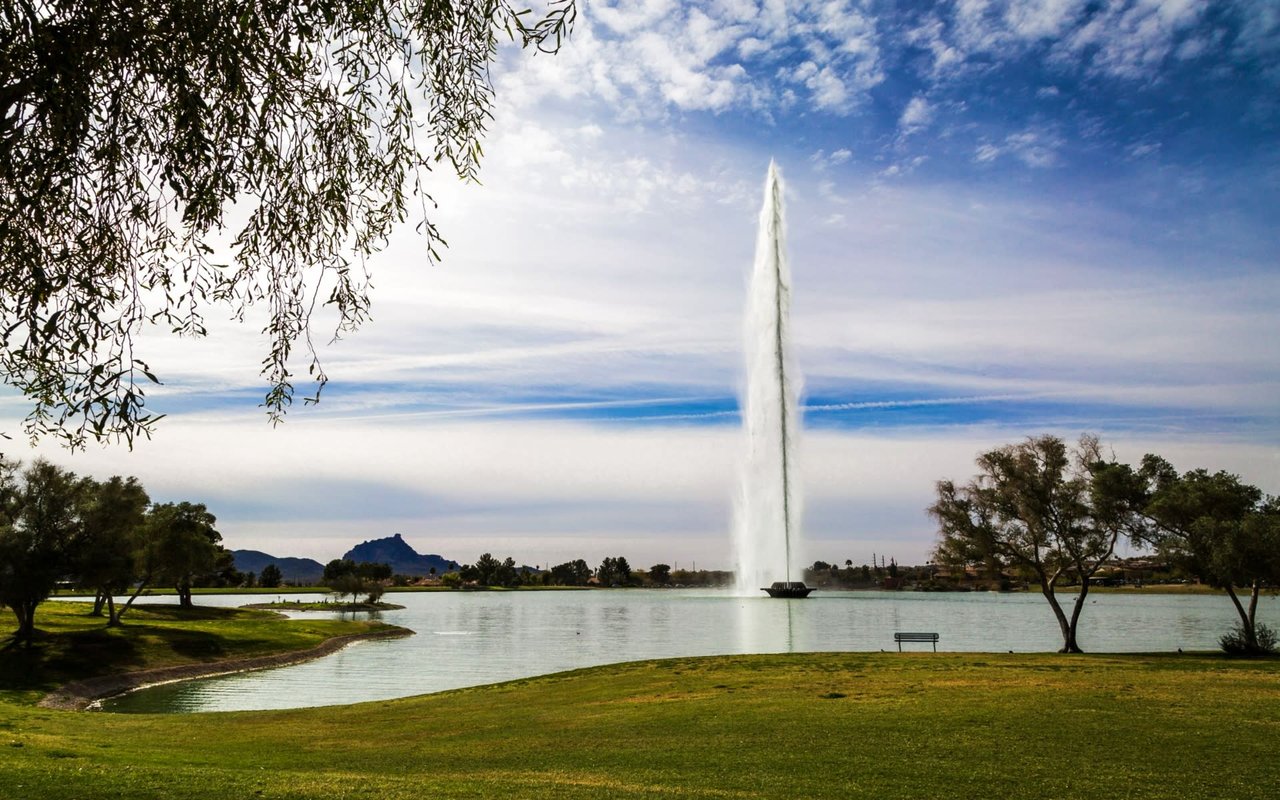
Chandler’s park system adds a lot of everyday value. According to the city’s parks guide, parks are generally open from 6 a.m. to 10:30 p.m., and notable features include the 6.5-mile Paseo Trail, Espee Park’s 33-acre bike park and spray pad, Shawnee Park’s dog park, and San Tan Park’s walking trails.
If staying active matters to you, these amenities can help shape where you want to live. A shorter drive to work feels even better when you are also close to the places you actually use on weekends.
Downtown amenities and culture
Downtown Chandler offers a more walkable, event-oriented lifestyle. The city describes it as a regional destination for shopping, dining, living, culture, and the arts, with more than 100 events a year and Dr. A.J. Chandler Park serving as a major event space.
The city also highlights arts and culture destinations such as Chandler Center for the Arts, Vision Gallery, Chandler Museum, and four public library locations. If you want a stronger mix of work access and local activity, central Chandler may be appealing.
Shopping and entertainment
For larger-scale shopping and entertainment, Chandler Fashion Center includes more than 200 stores, a 20-screen Harkins theater, Round1 Bowling & Arcade, SCHEELS, and nearby restaurant options.
That may sound secondary to a work move, but convenience matters. Easy access to shopping, dining, and entertainment can make a new city feel familiar much faster.
What to Know About Schools
Most of Chandler is served by Chandler Unified School District, which spans 80 square miles, serves parts of Chandler, Gilbert, and Queen Creek, and includes 45 school sites, more than 40,000 students, 65 home languages, over 5,000 employees, and a 92% four-year graduation rate.
The district also offers multiple program types, including AP, IB, dual-language, CTE, online, and early-college pathways. If schools are part of your move, it is important to verify the assigned school and available programs by address before you choose a home.
A Smart Scouting Trip Plan
If possible, visit Chandler before you sign a lease or go under contract. A well-planned scouting trip can save you time, money, and second-guessing.
Here is a strong checklist to follow:
- Test the actual commute at the time you expect to travel most often
- Compare at least one rental and one purchase option in your budget
- Verify school boundaries by address if that matters to your household
- Visit the amenities you expect to use often, like grocery stores, parks, libraries, daycare, shopping, and medical care
- Check how your route connects to Loop 101, Loop 202, I-10, or Sky Harbor if travel is part of your job
Questions to Ask Before You Move
A local real estate guide can help you connect the dots between commute time, budget, and long-term fit. Before you make a move, ask questions like:
- Which Chandler neighborhoods best match my exact employer location?
- Which areas are most competitive for renters or buyers in my price range?
- Which district or attendance zone does this address fall into?
- Are there HOA rules, parking limits, or amenity fees I should know about?
- How do freeway access and airport proximity affect value and day-to-day convenience?
- Which submarkets offer the best balance of commute and housing value for my situation?
Relocating for work is easier when your housing choice supports your schedule, budget, and lifestyle from day one. If you want local guidance on Chandler neighborhoods, commute-friendly home searches, or whether it makes more sense to rent or buy first, connect with Celina Acosta for personalized relocation support.
FAQs
What are the main employment areas in Chandler for relocating workers?
- Chandler’s main employment areas include Price Corridor, West Chandler, Airpark Area, Uptown Chandler, and Downtown Chandler, with Price Corridor being the largest job center.
What is the typical home price range in Chandler for buyers?
- Current data suggests Chandler home values and sale prices generally fall in a broad range from the high $400,000s to the mid $500,000s citywide, with some neighborhoods priced significantly higher.
What should renters expect to pay in Chandler?
- Recent rental data shows average Chandler rents around $1,690 to $1,848, depending on the source, with pricing varying by unit size and area.
Which freeways matter most for commuting in Chandler?
- The key commuter routes in Chandler are Loop 101, Loop 202, I-10, US 60, and Arizona Avenue, with Loop 101 and Loop 202 especially important for many major employers.
What should families verify before choosing a Chandler home?
- If schools are important to your move, you should verify school boundaries, attendance zones, and program availability by property address before making a final decision.